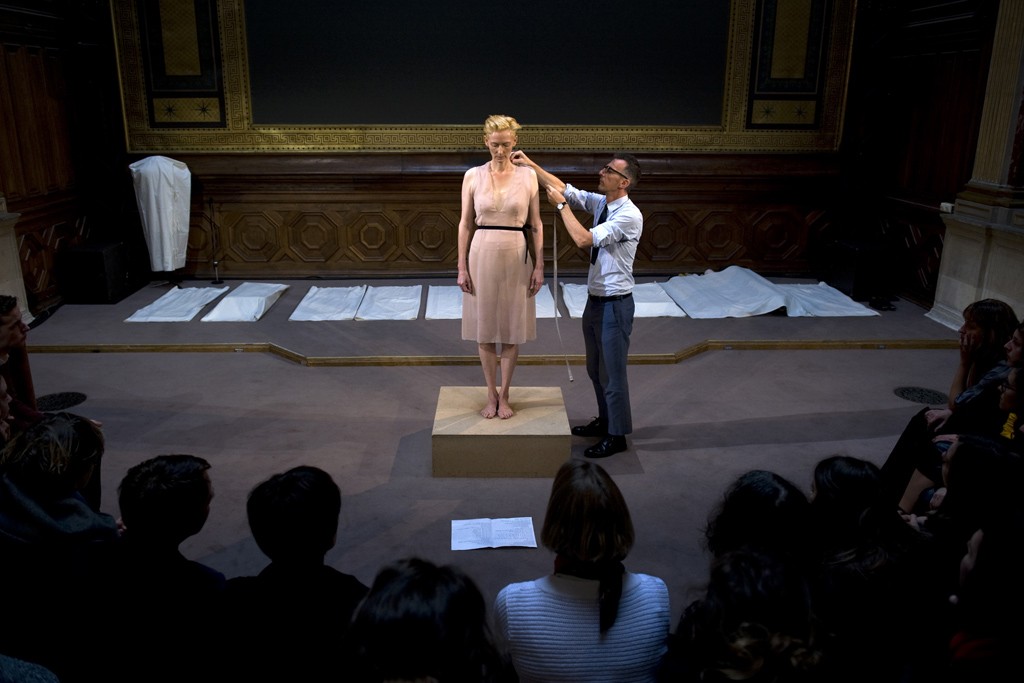
When everyone is going fast, Tilda Swinton slows down. The Oscar-winning actress has come together with fashion curator Olivier Saillard to present her latest project: “Eternity Dress” – a very special new, ballet-like performance in Paris which follows the design of one dress, made directly on Tilda Swinton’s body, from the measuring up to the creation of the pattern, from the cut to the sewing together.
During their fifty-one-minute performance starring which was sponsored by Chloé and staged at the École des Beaux-Arts as part of the annual French Festival d’Automne, Saillard and Swinton explored the art of dressmaking. Instead of mass production, high speed and an ongoing pressure on everyone working in there, the renowned fashion director, author and poet as well as Tilda Swinton thereby pointed the way to an alternative way of thinking and acting in fashion. These are not equal circumstances but what is shared at the heart of them all is the act of designing and creating which is a skill that often gets lost in the muddle when we talk about fashion. Inspired by a 1950s method found in the museum’s collections, “Eternity Dress” reminiscences about the art of true creation, initiates an archeology of the craft and resonates with the history of fashion.
While IWISHUSUN aims to change our handling and understanding of fashion and to create a win-win-situation that gives you a great product and at the same time saves another person’s eyesight, Olivier Saillard takes up another unusual position by creating a contemplative moment within the fast pace of fashion today. Learn more about the performance “Eternity Dress” here.
Photo: Olivier Saillard/ Tilda Swinton – Eternity Dress. © Vincent Lappartient.
]]>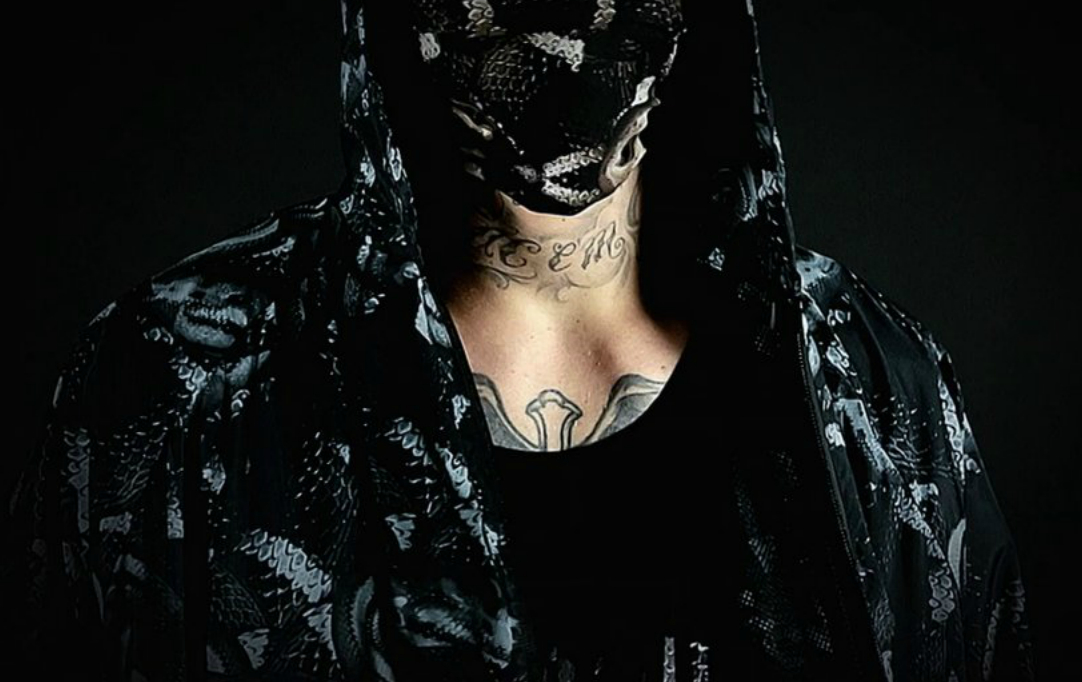
Friend of IWISHUSUN and Milan-based multi talent Marcelo Burlon just released his new video which visualises his upcoming Spring/Summer 2014 collection. Inked model Norman Theuerkorn stood in front of the camera to showcase a much wider collection than the past ones while the short film was directed by Marco De Giorgio. Check out the video here:
Read Marcelo Burlon’s interview with IWISHUSUN here and get your own Marcelo Burlon x IWISHUSUN Limited Edition T-Shirt here. With every T-shirt sold, in cooperation with our partner ORBIS a cataract eye operation will be financed in Dhaka, Bangladesh.
Pic: Screenshot.
]]>
Founder of Berlin-based fashion label lala Berlin and a friend of IWISHUSUN, Leyla Piedayesh looks amazing in our logo tee. Don’t miss to check out her interview here!
Get your own IWISHUSUN tee here and finance a pair of glasses for a school child in Bangladesh through the National Childhood Blindness Project (NCBP) from ORBIS, true to the motto “Buy a T-Shirt, improve a child’s sight”.
]]>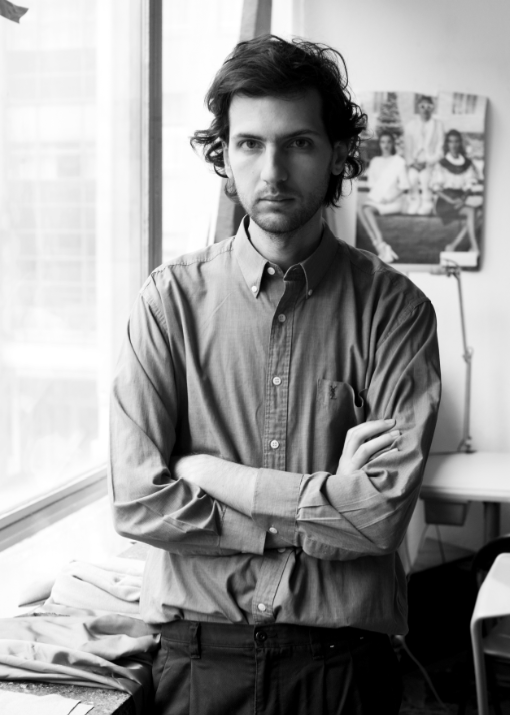
Vladimir Karaleev
Designer – Berlin
Vladimir Karaleev is without a doubt one of the most promising names at Berlin Fashion Week. From year to year we watch as he continues to develop, whilst remaining true to himself at the same time: clearly contoured experimental cuts and open hems, asymmetry and drapery, silk and wool dominate his collections, which are strongly influenced by the aesthetic of contemporary art. While his minimalistic styles are distinctive, the Bulgarian designer Karaleev, who is based in Berlin and founded his own fashion label in 2006, never gets tired of experimenting – and we hope he keeps on keeping on!
We are true fans of his designs but Vladimir Karaleev also supports IWISHUSUN. Welcome him as a friend!
What is more important to you, the sense of taste or sight?
It is hard to compare; both are interconnected. What is sight without taste, and taste is somehow based on sight. Both are very important I guess!
You are a creative person. What is your vision for your personal work?
A permanent quest for new ideas through experimentation.
Most of your designs are based on flowing cloth and asymmetry – is this decision a question of visual aesthetic or of emotion? How important is the visual power of your designs?
I think every designer finds their own way of expressing their visual language. I guess mine is based on sometimes less conventional techniques (the starting point of which can sometimes be a very basic pattern). I found it very hard to find a good balance within asymmetrical forms (if you think mathematically, there is no true balance in asymmetry, so you have to somehow compensate aesthetically). I am not really into prints; for me the perfect shape is a precise interplay between fabric, volume and colour: if they can get together without too much of a fight, then you’ve got it!
Silk is probably your most frequently used fabric. How important is the choice of material for you, and what does a fabric like silk transmit from your point of view?
I don’t confine myself to any one fabric. Sometimes silk gives me what I want, in order to achieve the shape I want, but my fabric of choice is wool. I love heavy falling wool crepe. And I mean, fabric is everything, it does transmit and carry the whole structure and shape.
Where do you source your fabrics from?
Mostly Europe, but you never know where they import their fabrics from. I must say, Europeans are not always the best partners, at least compared to Asia, where they have a much better work ethic.
What is your tactic for making the world a better place?
It’s important to take social responsibility and I try to take part in various causes that are close to my heart. Sometimes I feel bad because I don’t have more time, since our world is full of problems. As an entrepreneur I try to be as environmentally friendly as possible, to make my products sustainable without wasting too many resources - I do worry about that. Giving back is not a one-time act; it has to be a way of life and if more people lived that way, it would be much easier to solve many of our problems…
What is the most beautiful thing you ever saw?
I don’t know. I am not impressed by “beautiful”.
What would you like to see more often?
Understanding between people, tolerance, people listening to each other. In general, we are the problem and the solution: but currently it seems we have too many problems, and I’d like to see more solutions.
Sunrise or sunset – which do you prefer?
Sunrise, it’s a new day.
Pic: Dirk Merten.
]]>
Leyla Piedayesh
Founder of lala Berlin – Berlin
It’s almost 10 years ago that Leyla Piedayesh has founded her label lala Berlin. After resigning from her job as an editor at the music station MTV, a new period of her life began with a simple find at a flea market: knitted wristlets. She began to knit some herself and shortly thereafter lala Berlin was born – a label that has turned knitwear fashions inside out, that is characterised by noticeable combinations of cashmere, baby mohair and silk and that turned Leyla Piedayesh into one of Germany’s most famous and successful designers. Needless to say that we didn’t want to miss her clothes in our wardrobes, but we found a supporter in Leyla Piedayesh as well. Welcome!
Which sense is more important to you, touch or sight?
If I really had to decide – sight is more important to me personally.
Why?
I am an extremely visual person – I love the power and the significance of colours for example. And you simply can’t touch colours. Colours have a special meaning to me and are not only incredibly important in my work, but also for me personally.
You’re a creative person. What vision motivates you in your work?
The creation of new things and turning new ideas into reality. Creating something new that has never existed before in that way. It is not just the one vision, but every season there is always new inspiration and a new vision to go with it. It’s exactly that constant variety that I like; that is my driving force. Of course an overarching theme is the vision of lala Berlin – creating a look that is modern but also cool and relaxed and representative of Berlin.
As well as some monochrome looks your collection is defined mainly by striking colours and eye-catching prints. How important is the visual power that exudes, for you and your work?
There is a definite focus to every collection – also in terms of colour. I have a whole load of fun playing with colours and prints. But I do try to create new effects by working with colour contrasts or unexpected colour combinations. Striking, in part eccentric colours and expressive prints have simply become the trademarks of lala Berlin.
And privately? Do you prefer eye-catchers or a more restrained look?
In private I prefer mainly to wear my own collections – but I style them in my own personal way. I don’t like styling that’s too obvious, but on the other hand an extremely minimalist look is not my thing either. In brief: I go for restrained eye-catchers.
How and where do you find the inspiration for new motifs and patterns?
That depends: for example I get a lot of inspiration from my direct environment. The city in which I live and work is an important source. My young daughter also inspires me a lot with her ideas and preferences. Children can really fire up your imagination with their carefree ways. But often inspiration comes quite by chance.
Knits and silks are to a certain extent constants in your collection, in terms of material choices. Where and how do you find your materials?
At various textile trade fairs. There I can allow myself to be inspired by the most varied materials, nations and people. Of course I love to discover new things, unusual things and soak up the inspiration.
When did you last give something back and how?
There should be give and take in all our actions, starting with my daughter down to my co-workers. It shouldn’t really be necessary to think about it. It’s a done deal – everything is give and take.
What is your tactic to improve the world we live in?
Having a consciousness. About what we do, and what we consume. I may not be able to change the whole world like that, but it’s a step in the right direction.
What is the most beautiful thing you have ever seen?
My daughter – of course.
What would you like to see more of?
Happy laughing people around me, who don’t have a beef with everything and everyone.
Having a good mood simply motivates, and it’s contagious: high spirits should be part of every day life, not just privately, but at work as well.
Sunrise or sunset?
Sunset.
Photo: Peter Rigaud.
]]>
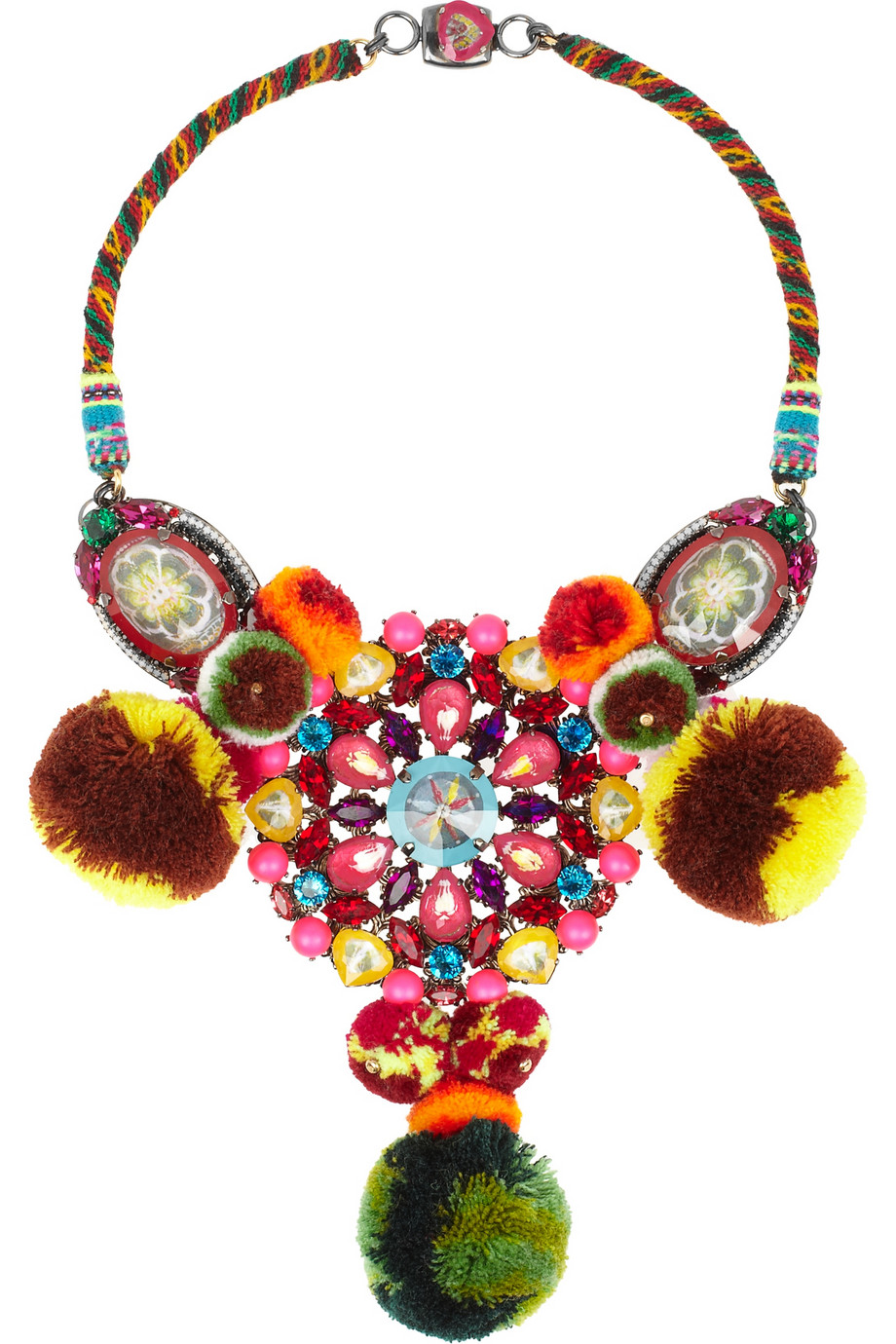
Mario Testino goes fashion design: „vibrant, exotic, glamorous” – these are the words Net-A-Porter chooses to describe the capsule collection which they have launched in collaboration with Testino. Referencing to his own Latin roots, the now London-based fashion photographer has branched out into fashion design to benefit his correspondent Peruvian not-for-profit initiative and presents: MATE, his new label that features abstract prints extracted from his images.

The photographer’s debut collection features a selection of T-shirts, scarves, kaftans and bags, with jewellery designer Vicki Beamon of Erickson Beamon creating the accessories. To benefit his arts foundation, Testino, who has captured everyone from Diana, Princess of Wales to Kate Moss and countless Hollywood celebrities, got inspired by his native Peru: Based on Testino’s exhibition “Alta Moda” – literally “high fashion” in Spanish –, which shows a series of photographic portraits of Peruvians wearing traditional and festive attire from the mountainous region of Cusco, his charity collection translated the same aesthetic into fashion design.
The range of clothing, bags and jewellery is available at Net-A-Porter since early June 2013. 20 per cent of the proceeds will benefit MATE. Find the whole Mario Testino for MATE collection here.
Currently on display at MATE, Asociación Mario Testino, “Alta Moda” represents a departure for Testino from his work for fashion magazines. Over a 5-year period Testino made several trips to Cusco city after he had discovered an archive of costumes from the region that inspired him. The photographer founded MATE in July 2012. In the bohemian district of Barranco in the city of Lima, a 13,000 sq ft mansion houses his arts foundation – the biggest collection of the photographer’s work alongside a permanent collection of work by Peruvian artists.
All images: Net-A-Porter.
]]>